2004
In view of the aging tendency of the age distribution of party members, the Central Committee decided to recruit young members into the party to cultivate a new generation of successors. On 11 January 2004, MCA President Dato’ Seri Ong Ka Ting launched for the first time, a campaign to recruit young members in order to infuse new blood to the party. He called upon the Chinese youths, especially the highly educated and keen to join MCA to combine the elders and youngsters to be active in politics. The membership campaign successfully recruited more than 2,500 young professionals between the ages of 18 to 30 years into the Party.
On 1 February 2004, MCA joined by the Federation of Chinese Associations Malaysia (FeCAM), the Associated Chinese Chambers of Commerce and Industry Malaysia (ACCCIM), 7 Major Clans, dozens of Chinese guilds and associations hosted a “Thank you from the Chinese Community” for recently retired premier Dato’ Seri Dr Mahathir Muhammad to commemorate his great achievements and significant for the country and people. The farewell dinner was held at Mines Exhibition Centre.
In his tenure, Dr Mahathir launched the Look East policy, strove to achieve developed nation status by launching the Vision 2020, created the Multimedia Super Corridor, guided the country in transition, practised an international outlook, overcame many difficulties and led the country towards a new era.
On 3 February 2004, the Central Committee led by MCA President Dato’ Seri Ong Ka Ting for the first time, held a reception for party veterans to wish them a happy Chinese New Year. Among the party elders who attended were Tan Sri Lee San Choon, Tan Koon Swan, Dato’ Kam Woon Wah, Tan Sri Chong Hon Nyan, Tan Sri Lee Kim Sai, Datin Paduka Rosemary Chong, Dato’ Loh Fook Yen and Dato’ Dr Neo Yee Pan.
In his speech, Ka Ting said that “MCA’s achievements today are due to veterans who sacrificed the best years of their lives. … MCA is a mature political party which has a good foundation. This is because of your merit and contributions.”
Eleventh General Elections (GE)
The long-awaited11th GE finally arrived when Parliament was dissolved on 4 March 2004. The Election Commission announced nomination day on 13 March 2004 and polling day on 21 March 2004.
MCA Headquarters had worked very hard in preparation for the 11th GE. Since 3 May 2003, the Cadre Training Bureau organised a series of 12 training workshops with a special session on “strategic planning of election campaigns” through its Cadre training center located on the 12th floor, Wisma MCA. Election training and coordination support was also held for leading cadres of the different states in preparation for the GE which could be called at any time.
MCA HQ Chief Administrative Director, Dato’ Wong See Wah launched a central operations room before the commencement of the campaign period, with the states, the District operations room in close contact. Even before nomination was announced, the operations room was also in action gathering information, carrying out observations, dealing with any unexpected events, providing publicity materials and logistical support, and during the election campaign, held a routine news conference before the opposition propaganda made inappropriate remarks and distorting the facts through criticism. MCA HQ elections operations room had conveyed the right message to the public.
In view of the seat re-delineation for this GE, additional seats were allocated to MCA to contest. MCA increased our BN parliamentary seats to be contested from 35 seats to 40. MCA seats for the State Assembly to be contested climbed to 99 seats, up from 77. MCA secured an additional 18 seats more than the previous GE for both Parliamentary and State Assembly seats.
After intense election campaign, during the 21 March 2004 polls, BN scored the best margin of victory with a four-fifths majority, securing 90% of the 219 parliamentary seats contested. BN won 197 parliamentary seats, and 452 out of 504 state seats available.
In this GE, MCA candidates won 31 out of 40 parliamentary constituencies contested and 76 state seats out of 90 contested which is better compared to the previous 1999 GE results of 28 parliamentary electorates and 68 state seats. The figures for the 2004 GE are also the second highest number of seats secured by a BN component party.
As the largest ethnic-based BN component party, MCA was in direct confrontation with DAP in many constituencies which had a mainly ethnic Chinese majority. DAP by virtue of being in the Opposition has a connection with PAS is thus directly or indirectly helping PAS to enlarge their support base and establish a theocratic Islamic state which will implement Syariah-based criminal laws. This ultimate goal of PAS angered the Chinese community which resulted in the rejection of PAS in 2004 and 1999. After two consecutive general elections defeat, DAP still plays up Chinese sentiments in Parliament, attacking government policy to elicit sympathy from Chinese voters. Hence, MCA does encounter a certain degree of pressure.
However, apart from Penang and Federal Territory where MCA’s votes were slightly affected, MCA still contested in 40 parliamentary electorates winning 31 seats, and 90 states constituencies and gaining 76 state seats. This success rate of 82.31% at the 11th GE maintains the good results obtained at the 10th GE.
New Cabinet lineup announced – MCA gets 16 official posts
After BN’s brilliant outing at the 11th GE, Prime Minister Dato’ Seri Abdullah bin Ahmad Badawi announced the new Cabinet lineup on 27 July 2004. MCA was given the posts of 4 Cabinet Ministers, 8 Deputy Ministers (an increase by one post), 4 Parliamentary Secretaries (an increase by two posts), the highest number of government posts ever given to MCA in the party’s history. Of the 16 official representatives from MCA, 6 are new.
While there is an increase of one Deputy Minister and two Parliamentary Secretaries, it should be pointed out that MCA retained its 4 Cabinet Ministerial positions. At the Cabinet lineup after the 1999 GE, MCA saw an increase of 2 Cabinet Minsters, one Deputy Minister and one Parliamentary Secretary.
The MCA Cabinet lineup as nominated by party President Dato’ Seri Ong Ka Ting obtained the full acceptance of the Prime Minister.
MCA’s official representation at the federal government comprised experienced leaders from the main wing as well as leaders from Wanita MCA and MCA Youth. It was also composed of new faces which is evidence of the value and recognition of Wanita MCA’s and MCA Youth’s contribution to the party.
New appointments at the MCA Headquarters
On 13 April 2004, the MCA Central Committee unanimously elected two new Vice Presidents i.e. Tan Sri Dr. Chua Soi Lek and Dato’ Fu Ah Kiow. Both replaced Dato’ Seri Ong Ka Ting and Dato’ Seri Chan Kong Choy who were previously elevated to be party President and Deputy President respectively.
Several new appointments were also made to the line-up of Party officials at the HQ and Adminsitration level in a minor MCA reshuffle approved by the Central Committee. MCA Terengganu state chairman Dato’ Lau Yin Pin was appointed Treasurer-General replacing Tan Sri William Chek lin Kwai who had retired. Other appointments are namely: Dato’ Hon Choon Kim (Deputy Secretary General), Dato’ Ir Donald Lim Siang Chai (Deputy Treasurer General), Sdr Yew Teong Look (Deputy National Organising Secretary). Three new appointments to the Central Committee were Lumut MP Dato’ Kong Cho Ha and MCA Deputy Youth Chairman Sdr Hoo Seong Chang and Malik Nawar State Assemblyman Dato’ Lee Chee Leong.
Under the presidency of Ka Ting, the vibrant Central Committee worked in co-operation and promoted a new political agenda which includes:
Revamping the MCA Disciplinary Board
The Central Committee empowered the Presidential Council to revamp the Party’s Disciplinary Board. Deputy President Dato’ Seri Chan Kong Choy was appointed as the Chairman to head the Board. Also appointed to the 5-men panel were Vice Presidents Tan Sri Dr. Chua Soi Lek and Datuk Wira Dr Fong Chan Onn; Youth chairman Datuk Ong Tee Keat and Wanita Chairman Dato’ Dr Ng Yen Yen. The Central Committee put on record its deep appreciation to the previous Board members for their contributions following the acceptable of resignation from the outgoing Disciplinary board Chairman and party veterans.
Ensuring a Disciplined MCA at all Levels –
A simple and practicable code of ethics governing the behaviour of party members on the “do’s and don’t’s” during party elections and the general elections was drawn up.
Publication of the “Guidelines for the MCA Members of Parliament and State Assemblymen”
On 11 May 2004, the Central Committee announced the “Guidelines for the MCA Members of Parliament and State Assemblymen”, and stated that the Guidelines are to be observed by the party’s elected representatives. All 107 MCA elected representatives were repeatedly reminded not to engage or involve in any activities that would tarnish the image of MCA. They are expected to uphold dignity and show proper decorum at all times. The party expects them to be “clean, trustworthy, disciplined and to adopt the right attitude.” In addition, they are also required to submit quarterly reports on their performance i.e. activities, service and action plans in their respective constituencies to MCA and the BN Management Committee Chairman.
Restructuring of the Institute for Strategic Analysis and Policy Research (INSAP)
MCA had established INSAP in the mid-80s as a think tank to conduct in-depth research, analysis and make recommendations on the political situation, opinions and attitudes at home and abroad as well as on economic, social issues which would be forwarded to the party leadership for date reference and implementation. INSAP was revived in 2004.
Amendments to party Constitution, a sound mechanism for party elections
On 21 November 2004, in order to improve the party’s election system, and to optimise the representation of central delegates, and to reduce the imbalance gap between Divisions with large or small memberships, an Extraordinary General Meeting was held.
After debates which saw the attendance of 1,700 central delegates, more than 99% voted in favour of the proposed amendments to the party Constitution. Secretary General Tan Sri Ting Chew Peh proposed changes to Article 12.4.
Public Service Department scholarship for Chinese students
On 16 July 2004, MCA President Dato’ Seri Ong Ka Ting announced encouraging news. 362 Chinese students who obtained outstanding results in SPM were awarded with Public Service Department scholarships after MCA successfully fought to obtain them.
Previously, PSD scholarships offered seemed to favour a particular community. In Cabinet, MCA had urged that Malaysian government policies should be more open and just, based on meritocracy.
Chang Ming Thien Foundation fully operational
On 25 July 2004, the Board of Trustees announced the formal operation of the Chang Ming Thien Foundation with immediate effect. RM 3 million was allocated to provide interest free loans to needy and deserving students, irrespective of race, religion and creed, so as to enable them to complete their tertiary education in Malaysia or overseas. Since 2004, hundreds of recipients have benefitted from the Foundation’s interest free loans annually.
Amendments to the “Code of Conduct for MCA members”
Earlier in 2002, MCA had released an “MCA Members Code of Conduct.” Some provisions were found to be too general or had loopholes. In 2004, at the revamp of the Disciplinary Board, it was decided to amend the “MCA Members of Conduct.” On 15 February 2005, the draft “MCA Members of Conduct” was submitted to the Presidential Council for deliberation. The Presidential Council accepted the proposal on the amendments and decided to implement them.
The new Code of Conduct now includes “Code of Conduct for Candidates at Party Elections”, “Code of Conduct for Candidates at General Elections” and the general “Code of Conduct for MCA Members.”
These Codes of Conduct contains 14 provisions which clearly explains and simplifies the do’s and don’t’s to be abided by MCA members to enable easier implementation.
To promote “Lifelong Learning”
On 31 July 2004, a brain storming session on the Lifelong Learning campaign was held between MCA and Chinese academic bodies. The gathering resolved to set up a secretariat and five working committee to carry out the necessary activities before the campaign was formally kickstarted. Party President Dato’ Seri Ong Ka Ting had engaged with well known Malaysian scholars, Chinese NGOs, youth groups and organizations engaged in volunteer activities to lay out the theoretical foundation, planning methods, short and long-term action plans in embarking on a Lifelong Learning campaign targeted to promulgate the pursuit of knowledge.
On 8 October 2004, the MCA Central Committee led by party President Dato’ Seri Ong Ka Ting launched the nationwide Lifelong Learning Campaign with an emphasis for personal development as learning is continuous. Chinese community leaders joined MCA leaders in participating in the “lifelong learning train” symbolically marking the programme’s launch.
Lifelong learning programmes offer a variety of activities be it formal studies, short courses, new hobbies throughout life that transform experiences into knowledge, skills and attitudes.
MCA Information Communication Technology Resource Center
On 8 October 2004, the Central Committee announced the formation of an MCA New Technology and Innovation Bureau headed by Dato’ Kong Cho Ha to encourage Malaysians to use information technology in their daily lives and to offer a one-stop ICT centre to assist in ICT e-enablement among SME associations and SME-ICT companies withint the ICT industry.
In January 2005, the MCA Information Communication Technology Resource Center (MIRC) began operations at the 12th floor of Wisma MCA to provide SMEs with ICT solutions that will enable them to remain competitive, helping them identify the technology they need and then matching it to the appropriate vendors who can help them. MIRC provides R&D information, product and service lifecycle management and marketing intelligence for both technopreneurs and SMEs. On 7 April 2005, MIRC was formally launched.
2005
New Village Master Plan
From 2000 to 2005, in addition to funding from the state and local governments, the federal government through the Ministry of Housing and Local Government allocated a total of RM326 million for New Village development.
Through his Ministry, i.e. the Ministry of Housing and Local Government, MCA President, Dato’ Seri Ong Ka Ting obtained an agreement with the Economy Planning Unit under the Prime Minister’s Department to allocate a special fund for the New Village Master Planning which includes infrastructure upgrading, optimising potential land usage, agriculture development and other potential development and planning in consultation with experts.
The New Village Master Plan proposes identifying the uniqueness of every New Village for their development at the same time preserving cultural heritage sites and conserving tourist attractions.
The New Village Master Plan will also recommend housing loans, infrastructure development and other government measures to be provided to the New Villagers.
MCA Crisis Relief Squad (CRSM) established for humanitarian works
On 4 January 2005, the Presidential Council announced the formation of CRSM seeing the devastation and hardship which had wrought the region after the tsunami struck on 26 December 2004. CRSM serves to mobilise teams immediately for disaster relief in times of emergencies and in areas hit by natural catastrophes or other forms of calamities. Parliamentary Secretary Sdr Chew Mei Fun was appointed to head the working committee. On 23 April 2005, CRSM was fully established and operational.
2005 Party Elections – Strong Mandate for the New Leadership
On 27 February 2005, the Party’s Election Steering Committee held a special briefing for all MCA Chairmen, Wanita Chairmen and Youth Chairmen Chairmen at State, Divisional and Branch level. The objective of the meeting was to explain to grassroot leaders on the rules and regulations of party election as well as the code of conduct of party members so that a democratic, transparent and fair election can be successfully conducted.
On 20 August 2005, the Annual General Assembly drew a record high 99.49% attendance rate compared to the previous AGM which demonstrates the mandate given to the Central Committee. Dato’ Seri Ong Ka Ting and Dato’ Seri Chan Kong Choy were elected as President and Deputy President respectively, Tan Sri Liow Tiong Lai was elected as MCA Youth chairman while Dato’ Dr Ng Yen Yen was re-elected as the Wanita MCA chairman.
In his Presidential address given after he officially received his strong mandate from the central delegates, Ka Ting brought up an important principle for future reform plans, that is, to practise “clean” and “diligence” governance, and to create a healthy political culture for MCA. This principle is in line with the concept of “be honest and upright in conducting oneself, be clean and incorruptible in discharging one’s official duties, and be steadfast and dependable in dealing with matters” that he enunciated at the 56th party anniversary in 2005.
General Guidelines for Public Office published
The new MCA leadership which was elected with a strong mandate from the central delegates during the party elections at the 52nd Meeting of the General Assembly. On 4 October 2005, the Presidential Council passed the General Guidelines for Public Office.
The General Guidelines for Public Office also sets limits to the length of the terms of office bearers at all levels i.e.
| Office | General Term Limit |
|---|
| Minister | 2 Parliamentary Elections or 10 years |
| State Executive Councillor | 2 State Assembly Elections |
| Senator | 1 term |
| District Councillor | 10 years |
| City Councillor | 8 years |
The term limitation allows helps institutionalise and facilitate the process of renewal of party leadership while allowing MCA members to contribute their full effort, creativity and dynamism within their term of 8 to 10 years when they are at their peak. At the end of their term of office, they will tehn move on to different roles, having passed the baton to other capable candidates with ideals and quality, giving the successors their full support and blessings so as to accelerate the renewal process. Only by doing so can MCA continue to operate at an optimal level.
MCA leaders who are recommended by the party to take up public office represent MCA in participating in the formulation and implementation of policies affecting Malaysia. They are the main navigators that leader MCA in moving forward. As such, Articles in the Code provide that MCA leaders have to set an example with their own conduct to practise the principle of having a healthy political culture. They have to possess certain fundamental qualities, such as incorruptibility and respect for the law, an upright and honest image, effectiveness, pragmatism, sense of responsibility , a close relationship with the people, and have the basic language skills to participate in policy discussions with all levels of government and the public. It is even more important for them to be selfless, putting the interests of the people and communities first, rather than being concerned about themselves.
2006
Development & Implementation of the MCA 9-Point Party Platform
MCA President Dato’ Seri Ong Ka Ting led MCA into a new era. In order to implement “diligent” and “clean” governance, the MCA 9-Point Party Platform was formulated which lays out the basis for the party’s future political directions and plans. It is the result of a consensus arrived at following collective and in-depth consultations. It takes into account the valuable opinions and suggestions provided by various representatives and members of the community to create a better future.
The MCA 9-Point Party Platform covers :
- A Healthy Political Culture
- Lifelong Learning Campaign
- Revitalising Education
- Chinese Language Education
- Economic Competitiveness
- Development and Promotion of Culture
- New Villages Development
- A Just and Caring Society
- Rakyat Malaysia
On 6 January 2006, the Central Committee unanimously adopted the MCA 9-Point Party Platform (9PPP) which puts into practice the long-term political direction of the party in the future.
The 9PPP covers a very broad spectrum. In order to ensure effective implementation of the 9PPP with specific ideas and action plans, two Coordination Committees were set up. The Deputy President presided over the coordination meetings to ensure that all plans and concerted efforts of the party were implemented progressively.
On 18 July 2006, the Central Committee announced funding for MCA Divisions and Branches to promote the 9PPP and effectively enhance the vitality and influence of MCA.
Teaching of Mathematics & Science in Chinese Primary Schools – (6-2, 3-2) Formula
To ensure that the fundamental education of Chinese in Malaysia is safeguarded, MCA has tried its utmost best to help solve the problems of teaching Mathematics and Science in English for Chinese primary school pupils at Standards 4 to 6. Long negotiation were held with Dato’ Seri Hishamuddin bin Tun Hussein Onn, Minister of Education within the Barisan Nasional channel. As a result, the 6-2, 3-2 formula was adopted whereby Mathematics is taught in Mandarin for 6 periods and 2 periods in English. As for Science, it is taught 3 periods in Mandarin and 2 periods in English.
It is MCA’s position to look after the aspirations of the Chinese particularly while advocating mother-tongue education. If there are any differing views on government policy, both sides would seek a compromise to solve the problem. MCA will always hold that mother-tongue education is best suited for teaching Mathematics and Science in primary schools while continuing both subjects in English at the secondary level to enhance the competitiveness of both the community and nation.
Establishment of the MCA School of Political Studies
On 22 January 2006, MCA President Dato’ Seri Ong Ka Ting conducted the official opening ceremony of the MCA School of Political Studies.
Other than advocating a mass political line and active recruitment of more members to enable the party to grow in strength, MCA cannot neglect the issues of the quality of its membership and upgrading of abilities of future party leaders. The MCA School of Political Studies aims to inculcate a healthy and appropriate politico-cultural mindset and to promote cadre training to enhance the quality and effectiveness of members and leaders at all levels.
Besides the cadre training courses specially arranged for party members, other courses are open to the public. The purpose of such courses is to keep participants informed on the latest position of the party so that they are able to better understand MCA. Participants are instilled with the values of humanity, professionalism, political awareness and etc.
“Tun Tan Cheng Lock Day” Commemoration Ceremony
On 9 June 2006, the MCA Central Committee meeting resolved, that 13 December 13 each year will be commemorated as “Tun Tan Cheng Lock Day” as a sign of respect of one of the nation’s founding fathers. A state funeral was accorded to the late Tun Sir Tan Cheng Lock when he passed away on 13 December 1960.
On 15 December 2006, MCA leaders together with other leaders of the Chinese Guilds and Associations who under the leadership of MCA President Dato’ Seri Ong Ka Ting held a “Commemoration Ceremony for the Late Tun Sir Tan Cheng Lock” at his resting place in Kampung Musai, Melaka. In his elegiac address, Ka Ting said that “the late Tun Tan should be called the ‘Political Father of Malaysian Chinese.’” This was because for without him, we would not have MCA today. Similarly, without Tun Tan, the Chinese in the country would have missed the opportunity of obtaining national independence and their Malaysian citizenship.
Cheng Lock’s memory will forever be etched in MCA for his tireless efforts in fighting for civil rights for the ethnic Chinese community coupled with efforts to promote racial harmony and national unity. He will always be remembered in Malaysian history for his sacrifices and contributions towards Malaya, in being part of the Alliance party which obtained independence from the British.
E-MCA
In 2006, following an announcement by MCA President Dato’ Seri Ong Ka Ting at the party’s 57thanniversary celebrations that MCA should go into full computerization in the next 3 years, the HQ immediately set up a committee to help realize this E-MCA aspiration. With help from MIRC, the HQ accomplished meeting the requirement of a computerized administration within a one-year period. The HQ also reviewed and upgraded the party’s website by displaying a new look. It is hoped that all MCA States and Divisions will emulate the HQ by adopting the same programme in E-MCA as the electronic contact system enables better rapport and connection with each other.
MCA Headquarters Budgetary Control System
In order to effectively manage the allocation of funds to Divisions, MCA Headquarters launched a Budgetary Control System, and concurrently formed a Headquarters Management Committee headed by the Secretary General. The Committee members include the Treasurer-General, National Organising Secretary with the MCA HQ Chief Administrative Director being its Secretary. Thus, MCA HQ’s administration and financial budget are systematically managed.
Youth clubs
To encourage more Chinese youths to join MCA and provide them an opportunity and a platform, Resolution 1.2 which was passed at the 53rd meeting of the General Assembly “welcomes all aspiring Malaysians from all ages to join MCA to co-operate with the party to strengthen the Chinese political power base in the country.”
MCA will also open an Under-35 category within MCA Youth to enable more support and creativity within the party with the hopes that this synergy will attract more youths to join MCA.
2007
The Cabinet heeded MCA’s recommendation that staff promotions at public universities (IPTA) be based on merit and not race. This saw 4 non-Bumiputras appointed to the post of Deputy Vice Chancellor at Universiti Malaya, Universiti Putra Malaysia, Universiti Kebangsaan Malaysia and Universiti Sains Malaysia.
2008
12th General elections-MCA suffers a setback
On 13 February 2008, the Prime Minister announced the dissolution of Parliament to make way for the 12th General elections, and the Election Commission announced the date of nominations to be held on 24 February 2008 and the polling day to be held on 8 March 2008.
For this election, MCA had put forward 40 candidates to contest for Parliamentary seats, and another 90 candidates to contest for State seats.
The party leaders had hoped that they will receive the support of the people through the rendering of their services to the public in the political, economic, educational, cultural, social, and other fields such as the construction of more Chinese primary schools, the expansion, relocation, and redevelopment of those schools, the development of New Villages as well as for agriculture, helping to acquire legal land leases for Chinese farmers in Perak, and to fight for other issues which are of concern to the Chinese community. By placing advertisements in the newspaper, and on television channels, going on campaigns, and visiting households, it was hoped that the party’s message and contributions will be spread to the public, and that the people will once more put their trust in to the party. Unfortunately, MCA’s efforts were not able to resolve the growing dissatisfaction with Barisan Nasional.
This was partly due to the opposition parties which had pursued a populist propaganda. Pakatan Rakyat had preached the upholding of values such as justice and democracy while at the same time criticizing Barisan Nasional’s so called ‘race-politics’ in order to stir up the racial sentiments of the different ethnic groups through the use of technology such as mobile phones, SMS and the new media i.e. internet new portals and blogs, thus culminating in the political tsunami result of 308.
On the whole, the 12th general elections was the worst election record for the Barisan Nasional coalition. MCA had only gained 15 Parliamentary seats out of 40 and only 31 State seats out of the 90 contested, winning less than half the number of seats that it had won in the previous general elections. The Malaysian Indian Congress (MIC), which had contested in 9 Parliamentary seats, lost 2/3 of the seats, reducing them to only 3 Parliamentary seats. Parti Gerakan Rakyat Malaysia fared even worse, ending up with only 2 Parliamentary seats from the original 7 which it had contested.
Relying on UMNO’s 78 Parliamentary seats and the seats obtained by Barisan Nasional’s Sabah and Sarawak component parties, the coalition managed to maintain its power and become the ruling government through a simple majority, but lost its crucial two-thirds majority in Parliament.
In the state legislatures, Barisan Nasional not only was unable to recover the state of Kelantan to the Islamic party of PAS since 1986, but it also lost its administration in the states of Kedah, Penang, Perak, and Selangor through the combination of seats won by the opposition parties of PKR, DAP, and PAS.
President Dato’ Seri Ong Ka Ting bears responsibility for MCA’s losses
In the first three days after the results of the 12th general elections, MCA President Dato’ Seri Ong Ka Ting issued a public statement announcing that he will bear responsibility for the Party’s setback and that he will not hold any positions in the Cabinet. This decision was made based on the concept of accountability and responsibility, and also to reflect the spirit of the party President’s purpose which is not for political power or status.
Dato’ Seri Ong Ka Ting also stated that he will continue to fulfill the responsibility entrusted to him as MCA President to lead the party through its critical moments. He stressed that he will coordinate with all party leaders and members at all levels in order to conduct an in-depth and objective review of the general elections and the Party’s position and to make the appropriate adjustments to MCA in view of the new political situation so that the party may continue to play an effective role in politics.
New Cabinet lineup
On 18 March 2008, Prime Minister Dato’ Seri Abdullah Haji Ahmad Badawi announced his new Cabinet lined up. MCA, through President Dato’ Seri Ong Ka Ting had secured 4 Minister and 6 Deputy Minister positions, thus ensuring that the party will have sufficient representatives to continue voicing out the interests and rights of Malaysians in the Cabinet and Federal government. The Minister and Deputy Minister positions appointed are as follows:
Minister
| Ministry of Housing and Local Government | Dato’ Seri Ong Ka Chuan |
| Ministry of Transportation | Datuk Ong Tee Keat |
| Ministry of Health | Tan Sri Liow Tiong Lai |
| Ministry of Women, Family and Community Development | Dato’ Dr Ng Yen Yen |
Deputy Minister
| Ministry of Finance | Dato’ Kong Cho Ha |
| Ministry of Home Affairs | Dato’ Chor Chee Heung |
| Ministry of Education | Dr Ir Wee Ka Siong |
| Ministry of Higher Education | Dr Hou Kok Chung |
| Ministry of Information, Communication and Culture | Sdr Teng Boon Soon |
| Ministry of Youth and Sports | Sdr Wee Jeck Seng |
MCA’s success in attaining four Minister and six Deputy Minister positions in important, strategic sectors despite suffering heavy losses in the general elections surprised many political observers. However, the party’s success in attaining those positions lies with the MCA President who had made a commitment to ensure that MCA is well represented in Cabinet through Barisan Nasional’s power-sharing tradition, adhering to the principle that MCA is a BN partner, and through discussions held with the Prime Minister.
“Governing with the people, sharing among the races”
After the 12th general elections, the Central Committee held two days of meeting and brainstorming sessions and seminars to discuss the future direction of the party. The meeting also appointed several leaders to formulate plans for the actions discussed.
On 26 April 2008, the Central Committee decided to adopt the theme of “Governing with the people, sharing among the races” as the party’s main direction, and had proposed Four Core-Values to be the new thrusts of the party. The Four Core-Values are:
- Democratic principles
- Rights of the people in accordance with the Federal Constitution
- People centric
- National aspiration
MCA will continue to abide by the principles advocated by the party’s founding fathers of “a party based on one race, the direction towards various races” to ensure that the rights of the Chinese community will always be upheld, and at the same time, to defend the Federal Constitution which ensures freedom, democracy, and human rights to all Malaysians regardless of race.
President Dato’ Seri Ong Ka Ting does not seek re-elections
On 28 June 2008, the Party President issued a statement that he will not seek reelection in the coming party elections to be held in October. He also stress that after 3 months since the 308 political tsunami, MCA has already stabilized itself and is now working towards the transformation direction. Therefore, he would allow the party grassroots some time to accept the party’s change and so that the central delegates, by using their own judgment and wisdom, may elect the next Party President.
MCA free from loans
On 24 July 2008, MCA President Dato’ Sri Ong Ka Ting announced in the Central Committee meeting that MCA had cleared off all its debt with the bank on 18 April 2008. The President also then announced that the party is now ready to acquire back the 20.33% shares in Wisma MCA Sdn Bhd which the party was forced to sell off in the 1980’s due to the financial recession back then.
On 15 August 2008, the party President and the Treasurer General, Tan Sri Lau Yin Pin, signed a Sales and Purchase agreement worth RM27.6 million with representatives from Koperasi Jayadiri (KOJADI), thus realizing the party’s aim of owning 100% equity shares in Wisma MCA Sdn Bhd.
2008 Party Elections
The MCA Central Committee had decided that the nomination day for the 2008 party elections was to be held on 13 October 2008, with 18 and 19 October 2008 to be the for the party elections and Annual General Assembly. Both the incumbent Party President and Deputy President, Dato’ Seri Ong Ka Ting and Dato’ Seri Chan Kong Choy had declared their intention to retire and not seek reelections.
On the evening of 18 October 2008, Datuk Ong Tee Keat and Tan Sri Dr. Chua Soi Lek were elected to be the President and Deputy President respectively. Out of 25 members of the committee, more than half of them elected were new faces.
The following is the list of the newly elected MCA Central Committee:
President
Deputy President
Vice-Presidents
Dato’ Seri Kong Cho Ha
Tan Sri Liow Tiong Lai
Dato’ Sri Dr Ng Yen Yen
Sdr Tan Kok Hong
Central Committee members
Sdr Lee Wei Kiat
Senator Dato’ Wong Foon Meng
Datuk Seri Tan Chai Ho
Sdri Tan Cheng Liang
Sdr Dr Hou Kok Chung
Dato’ Lee Chee Leong
Sdr Gan Ping Sieu
Dato’ Yu Chok Tow
Sdr Wong Nai Chee
Dato’ Lee Sing Chooi
Datuk Wee Jeck Seng
Datuk Gan Tian Loo
Dato’ Dr Yeow Chai Thiam
Dato’ Chong Itt Chew
Dato’ Hoh Khai Mun
Dato’ Ti Lian Ker
Dato’ Liew Yuen Keong
Dato’ Wong Mook Leong
Dato’ Paul Kong Sing Chu
Datuk Edward Khoo Keok Hai
Datuk Tee Siew Kiong
Sdr Loh Seng Kok
Senator Dato’ Wong Siong Hwee
Sdr Dr Por Choo Chor
Dato’ Loke Yuen Yow
MCA launches a new team
After the 308 political tsunami, MCA had, through democracy, elected a new leadership team. The Central Committee was reminded that reform was not only a slogan to be uttered, but it is the current mainstream of the Malaysian society. However, the road to reformation is not an immediate process, and MCA needs the full support of its members for it. Since the opposition parties have claimed 5 states as their own, thus the party needs to embrace different strategies in order to recover their losses in those states.
2009
MCA President leads a delegation to the People’s Republic of China
On 18 January 2009, Party President Dato’ Sri Ong Tee Keat had responded to an invitation extended by the People’s Republic of China by leading a delegation of 68 Chinese political leaders and businessmen to Beijing. During the visit, both sides exchanged views and experiences on business opportunities and political administrations.
The delegation met with the leadership of the Chinese authorities, including Chairman of the Chinese People’s Political Consultative Conference and member of Politburo Standing Committee of the Communist Party of China, Mr. Jia Qinglin, Mr Wang Jiarui, Vice-Minister Liu Hongcai, Minister of Transport Li Shenglin, and various leaders from the Ministry of Railways, the Civil Aviation Administration, COFCO, the Ministry of Commerce, and the National Tourism Administration. Among the fruitful results of the mission were:
- China’s top universities were invited to establish campuses in Malaysia to come
- Al-Bukhary Foundation pledged to provide 50 full scholarships for Chinese students living in poverty to study various disciplines at approved universities in Malaysia were made
- China’s resumption of rice exports to Malaysia. Both sides also explored the development of agricultural products, palm oil
- Develop the halal food market in China
- New AirAsia direct routes to Tianjin, Xi’an and Chengdu
- Liberalization of the aviation sector
- Invited Chinese companies to invest in seaport expansion and development in Tanjung Pelepas and Johor port as well as developing Senai airport as an aviation hub
- Proposed that Bank of China in Malaysia offer low interest loans and micro-credit facilities to small and medium enterprises in Malaysia
- Ties with the Ministry of Health on medicines and medical equipment
Visit by the Deputy Speaker of Taiwan
On 3 January 2010, MCA Secretary-General cum Deputy President of the Dewan Negara Dato’ Wong Foon Meng, along with MCA members of Parliament and Senators, met for two hours with a delegation from Taiwan, led by Deputy Speaker of the Legislative Assembly of Taiwan, Mr Tsing Yon-Chun.
Visit by the Chairman of Kuomintang
On 28 February 2009, the MCA President and Central Committee members played host to a delegation led by the Chairman of Kuomintang, Mr Wu Poh-hsiung. The two parties had engaged in an hour long discussion and exchanging of views.
Visit by a Delegation from the People’s Republic of China
On 25 March 2009, the MCA President and members of the Central Committee played host to a delegation from the International Liaison Department of the Communist Party of China at MCA Headquarters.
Three Thrusts of MCA’s Transformation
In light of the political tsunami of 2008, MCA President Dato Sri’ Ong Tee Keat had proposed the Three Thrusts for MCA’s Transformation during the Party’s 60th Anniversary. Party members were urged to join in promoting the three thrust for change.
A) Tackling Economic Challenges
To reform and improve the quality of public transportation. President Dato’ Sri Ong Tee Keat, as Transport Minister, had led a radical reformation of the public transport system. The four major reforms headed by him are:
- Enhancing public transportation through the use of information technology and monitoring systems, such as using satellite navigation systems (GPS) to track buses, the implementation of the Kuala Lumpur Urban Intergrated Traffic Information System (ITIS) using close circuit television, and the implementation of customer service centre and call centre management systems.
- Simplifying procedures such as ensuring those who have received summons will be able to pay up
- The establishment of a special law enforcement team to avoid overlaps and confusion in job jurisdictions.
- To enhance compliance of the law by increasing the number of law enforcement officers as well as to provide training for public transport drivers.
Higher Opportunities for Private Education (HOPE) Foundation
MCA through the HOPE Foundation has helped many students to further their education to a higher level. Help was given in the forms of subsidies to qualified students, regardless of race, and has helped 1200 poor students to further their studies to private universities in Malaysia.
Technical Resource and Internship Network (TRAIN)
A vocational training network called TRAIN was set up with the full support of MCA President Dato’ Sri Ong Tee Keat. TRAIN is meant to provide vocational training to all students regardless of race, as a means for them to master living skills. About 1500 students to date have benefited from this project, and about 10,000 education coupons worth RM50 million have also been given to students who have showed interested.
A new milestone for Universiti Tunku Abdul Rahman
The Bachelor of Arts (Hons) Chinese Language is one of 32 courses offered by UTAR, and is recognized by the Public Service Department, thus allowing students to be admitted into the civil service.
B) Proactive in Mainstream Politics and Policy Making
Investigations into the Port Klang Free Zone scandal
The Ministry of Transportation had appointed internationally renowned accounting firm PricewaterhouseCoopers (PWC) to set up a special task force to investigate the misuse and mismanagement of public funds in the PKFZ. The results of the investigation, which revealed the involvement of fraud, were made public and reports with the police and the MACC were lodged.
Banning of support letters
In January, Dato’ Sri Ong Tee Keat in his capacity as Transport Minister, announced that all government departments are not allowed to issue support letters to any who are bidding for government contracts. The Whistleblower Act was also introduced to encouraged people to report any misusage of public funds.
Abolishment of Monopoly Policies
Due to the fact that the e-kesihatan programme was too costly, thus burdening 700,000 taxi drivers nationwide as well as creating a problem of monopoly, the Ministry of Transportation decided to end the programme on 14 October 2008. Besides that, the PUSPAKOM contract with the government which was originally for 15 years, thus allowing the monopolizing of the market, was reviewed to 5 years, after which the contract will be awarded based on open tender.
Liberalising the Economy
On 22 April 2009, the Cabinet announced the abolishment of the 30% Bumiputera equity for 27 service sub-sectors as part of the process of liberalizing the economy. The process also involves the liberalization of the economic sector as well as the abolishment of the 30% Bumiputra equity for all listed companies in Bursa Malaysia.
Direct Funding for SJKC Board of Directors and the construction of 20 new SJKC
MCA had recommended that allocations for SJKC schools be given directly to the Board of Directors of SJKCs, and the recommendation had been accepted by the government. Also, the government had allocated RM 95 million for the construction of 20 new SJKCs.
C) Enhancing Inter-Ethnic Relationships
1 Malaysia Concept
In early 2009, shortly after becoming Prime Minister, Dato’ Sri Najib Razak introduced the 1 Malaysia concept. This concept was synonymous to the racial harmony concept as espoused by MCA, as well as the ideology of MCA’s founder, Tun Tan Cheng Lock, who said that “One of the main objectives for the establishment of MCA is to work together with the Malays and other races to help Malaya become One People, One Nation, One Government.”
MCA lends a helping hand to Metro Tabernacle Church
When the Assembly of God Metro Tabernacle Church located in Desa Melawati was torched on 8 Janury 2010, MCA was among the first to condemn this act and had resolutely defended the right to freedom of religion as enshrined in the Constitution. MCA President Dato’ Sri Ong Tee Keat had also offered the services of San Choon Hall for free for church members to perform their Sunday worship.
Extraordinary General Assembly
On 26 August 2009, the MCA Presidential Council had deliberated and accepted the proposal by the MCA Disciplinary Board, and had expelled Deputy President Tan Sri Dr. Chua Soi Lek from the party with immediate effect on grounds of breaching the party’s Code of Conduct for MCA members.
On 27 August 2009, supporters of Tan Sri Dr. Chua Soi Lek had petitioned an Extraordinary General Meeting to hold a vote of no confidence against Party President Dato’ Sri Ong Tee Keat.
On 11 September 2009, the Party Secretary-General received a joint requisition stating that 921 members of the Central Delegates, which totals to at least one-third of the delegates, had already requisitioned in writing for an EGM to be held on the following resolutions:
- That the members of the General Assembly have no confidence in the leadership of the current President of MCA, Dato’ Sri Ong Tee Keat.
- That the decision of the Presidential Council on 26 August 2009 (accepting the recommendation of the Disciplinary Board) and the subsequent decision of the Central Committee (if any) to expel or suspend Tan Sri Dr. Chua Soi Lek from membership of the MCA is hereby annulled.
- That following from the passage of Resolution (2) above, that Sdr Tan Sri Dr. Chua Soi Lek be rightfully restored to the position of Deputy President of the MCA.
- That if by the time this EGM is called, any appointment that has been made by the Central Committee in accordance with the Constitution of the MCA of Any Party Officials mentioned in Article 20 of the Constitution of the MCA including that of the Deputy President of MCA, that the said appointment(s) be and is hereby revoked.
- That if by the time the EGM is called, any disciplinary action is taken against any or all the requisitionist by any member of the MCA or by the Disciplinary Board, the Central Committee of the Presidential Council or if any sentence has been meted out against any one or more of the requisitionists, that the General Assembly do hereby resolve:
- that any and all such disciplinary action be dismissed;
- that any sentence that has been meted out be annulled;
- that any complaint or disciplinary action be considered and treated as dismissed.
After negotiations by both sides, the Secretary-General resolved to convene the EGM on 10 October 2009 at the San Choon Hall, Wisma MCA. On the day of the EGM, the Speaker, Dato’ Yik Phooi Hong, said that both parties had written in to substantiate that as Resolution 4 and 5 did not happen, the two said Resolutions will be withdrawn and that the delegates will cast their votes for the first three resolutions.
Results of the EGM
1) That the members of the General Assembly have no confidence in the leadership of the current President of MCA, Dato’ Sri Ong Tee Keat.
Adopt : 1155 votes
Reject : 1141 votes
Spoilt : 8 votes
Total : 2304 votes
2) That the decision of the Presidential Council on 26 August 2009 (accepting the recommendation of the Disciplinary Board) and the subsequent decision of the Central Committee (if any) to expel or suspend Tan Sri Dr. Chua Soi Lek from membership of the MCA is hereby annulled.
Adopt : 1240 votes
Reject : 1095 votes
Spoilt : 5 votes
Total : 2304 votes
3) That following from the passage of Resolution (2) above, that Sdr Tan Sri Dr. Chua Soi Lek be rightfully restored to the position of Deputy President of the MCA.
Adopt : 1110 votes
Reject : 1184 votes
Spoilt : 10 votes
Total : 2304 votes
On 15 October 2009, in view of the controversy that emerged from the EGM, MCA President Dato’ Sri Ong Tee Keat had directed the Secretary-General at the Central Committee meeting to conduct another EGM in accordance to Article 30.1 of the Party Constitution to vote on the following motion:
- That the current Central Committee be dissolved to seek new party election; or
- To endorse the Central Party leadership of President Dato’ Sri Ong Tee Keat.
The Central Committee at that meeting also appointed Tan Sri Liow Tiong Lai as the new Deputy President in accordance with Article 174 and Article 23 of the Party Constitution.
On 3 November 2009, at the 8th Central Committee meeting, the President announced that he had received a letter from the Registrar of Societies which stated that the results of the EGM on 10 October 2009 did not fulfill Article 35 of the Party Constitution which stated that at least two-thirds of the central delegates votes was needed to dismiss an elected post, thus affirming that the post of Deputy President was never vacant, therefore affirming that Tan Sri Dr. Chua Soi Lek still held the Deputy President post. The Central Committee also adopted the views and opinions which were provided by the Registrar of Societies.
The President also pointed out that when he had first appointed the Central Committee appointments the previous year he had stated that all appointments were only for a year and that all appointments will be subjected for review. As such, that was the reason why the President had appointed Dato’ Donald Lim Siang Chai, Dato’ Tan Chin Meng, and Sdr Chua Tee Yong to replace Dato’ Wira Chor Chee Heung, Sdr Yoo Wei How, Sdr Gan Hong Su, and Dato’ Chai Kim Sen whose positions had been reshuffled. He also announced that the post of National Organizing Secretary, previously held by Sdr Yoo Wei How, will be filled soon. The President also appointed Sdr Lim Hong Sang to succeed Datuk Leong Tang Chong as Chairman of the MCA Legal Bureau and Senator Heng Seai Kie as Chairman of the Information and Communication Bureau, succeeding Sdr Lee Wei Kiat. The President also tabled the “Greater Unity Plan for MCA” at the Central Committee meeting where it was endorsed by 27 of the Committee members.
MCA Greater Unity Plan
On 22 October 2009, in order to quell the party’s internal problems, MCA President Dato’ Sri Ong Tee Keat, together with Tan Sri Dr. Chua Soi Lek, Tan Sri Liow Tiong Lai, Dato’ Sri Kong Cho Ha, Dato’ Sri Dr Ng Yen Yen, Dato’ Wong Foon Meng, Senator Heng Seai Kie, and other members of the Central Committee, held a press conference in MCA Headquarters to announce the Greater Unity Plan.
Under the Greater Unity Plan, Deputy President Tan Sri Dr. Chua Soi Lek will return to the committee without any conditions imposed on him. The President also announced that the Greater Unity Plan had been endorsed by the Prime Minister, and that he will ask Secretary-General Dato’ Wong Foon Meng to review the legality of the 1128 EGM.
Dato’ Sri Ong Tee Keat also stressed that now is the time to forgive and forget, and that all factions should put aside any disagreements and work together for the party’s future so that Party leaders will be able to focus more on the strengthening the Party and win back the confidence of the Chinese community in MCA.
Dialogue with Grassroot Leaders
On 15 November 2009, MCA had a dialogue session with the party’s grassroot leaders at the San Choon Hall. The dialogue was well attended with 625 leaders, or more than 80% of the division leaders present at the session.
Deputy President Tan Sri Dr. Chua Soi Lek chaired the dialogue which discussed five main agendas:
- funding for divisional activities, given that the party has sufficient resources for this;
- whether the resolutions for the 1128 EGM are in line with the Party Constitution;
- direct elections for the post of President and Central Committee (CC) members, and the model to be used if the proposal is accepted;
- how to achieve the Greater Unity Plan and and to stabilize the Party;
- preparations for the next general elections.
During the dialogue, party leaders and grassroot leaders analyzed, exchanged views, and gave in-depth commentaries about a number of issues.
1128 EGM
The MCA Integrity Restoring Task Force was led by MCA Vice-President Tan Sri Liow Tiong Lai and 13 other highly respectable Party members. The purpose of the taskforce was to defend the Party’s integrity by holding fresh elections in order to solve the confusion of the EGM held on 10 October 2009. The taskforce requested that an EGM be held by quoting Article 30.2 in the Party Constitution which stated that the consent of at least one-third of the Central Committee (13 members) was needed. However, on 18 November 2009 Central Committee rejected the EGM with a vote of 23 to 10.
2010
Datuk Sim Mow Yu – UTAR Chinese Studies Scholarship Fund
On 3 January 2010, MCA President Dato’ Sri Ong Tee Keat announced the establishment of the Datuk Sim Mow Yu UTAR Chinese Studies Scholarship Fund, in memory of Datuk Sim Mow Yu, who had selflessly contributed to the improvement of Chinese education and the community.
The President had also pointed out that UTAR’s Chinese Studies Course is recognized by the Public Service Department, thus enabling students to pursue their career in the civil service. He also added that the party had donated RM 1million to start the Fund.
Dato’ Sri Ong Tee Keat and Party Secretary-General Dato’ Wong Foon Meng, accompanied by Datuk Gan Tian Loo, had paid a visit to the former residence of the late Datuk Sim to meet his family and to seek their consent on the establishment of the Fund before making the announcement.
Besides that, the President also pointed out that one of the halls in MCA Headquarters will be named after the late educationist in honor of his contributions and so that the party can continue the his efforts.
Datuk Sim Mow Yu’s daughter, Sim Kay Hong was at the ceremony to represent the family.
328 Party Fresh Polls
On 4 March 2010, Deputy president Tan Sri Dr. Chua Soi Lek submitted his resignation letter along with 7 others from the party’s Central Committee. Adding this number together with the earlier resignations of 13 other Central Committee members, the total number of resignations was brought to 21, thus paving the way for fresh elections.
The Central Committee consists of 25 elected members, a Party President, a Deputy President, and 4 Vice-Presidents, bringing the total number of committee members to 31. Therefore, to facilitate a fresh party election, a minimum of 21 members, or at least two-thirds of the committee, must resigned.
As per the Party Constitution, Section 41 states that if at least two-thirds of the Central Committee resigns, a fresh party election must be held within a months’ time. Accordingly, on 5 March 2010, the remaining members of the Central Committee appointed Secretary-General Dato’ Wong Foon Meng as coordinator of the fresh party elections for a new Central Committee. Subsequently, he announced that fresh elections will be held on 28 March 2010 at the San Choon Hall, MCA Headquarters.
On 28 March 2010, the day of the fresh elections, a total of 101 representatives had submitted their nomination papers. The attendance rate of the Central Delegates was 97.52%, a total of 2318 delegates.
The vote counting process was done in a transparent manner, meaning that the process was done in the hall under the full supervision of the Central Delegates and candidates. In addition to that, the procedure can also be viewed live on a television placed outside the hall for public viewing.
The results of the election showed that the delegates had chosen Tan Sri Dr. Chua Soi Lek and Tan Sri Liow Tiong Lai to be the Party President and Deputy President respectively.
Results of the 328 Fresh Party Polls
President
Deputy President
Vice-President
Dato’ Sri Dr Ng Yen Yen
Senator Dato’ Donald Lim Siang Chai
Dato’ Wira Chor Chee Heung
Senator Gan Ping Sieu
Central Committee members
Dato’ Lee Chee Leong
Dato’ Dr Hou Kok Chung
Senator Heng Seai Kie
Datuk Wee Jeck Seng
Sdr. Toh Chin Yaw
Datuk Gan Tian Loo
Dato’ Seri Ong Ka Chuan
Sdr. Lee Wei Kiat
Sdr. Loh Seng Kok
Dato’ Hoh Khai Mun
Dato’ Liew Yuen Keong
Sdri. Tan Cheng Liang
Dato’ Koh Nai Kwong
Sdr Dr Por Choo Chor
Sdr. Tan Ken Ten
Datuk Paul Kong Sing Chu
Dato’ Chong Itt Chew
Sdr. Yoo Wei How
Sdri Tan Ah Eng
Sdr Wong Koon Mun
Dato’ Ti Lian Ker
Dato’ Teh Kim Poo
Sdr Chuah Poh Khiang
Cabinet Reshuffle
On 4 June 2010, Prime Minister Dato’ Sri Najib bin Tun Abdul Razak carried out a minor Cabinet reshuffle. Through the President’s efforts, MCA successfully obtained two important portfolios i.e. Deputy Minister of Agriculture & Agro-based Industry and also the Deputy Minister of Home Affairs. By the said reshuffle, MCA has altogether 4 full Ministers and 7 Deputy Ministers as follows:
| Minister of Health | Tan Sri Liow Tiong Lai |
| Minister of Transport | Dato’ Seri Kong Cho Ha |
| Minister of Tourism | Dato’ Sri Dr Ng Yen Yen |
| Minister of Housing and Local Government | Dato’ Wira Chor Chee Heung |
| Deputy Minister of Finance | Senator Dato’ Donald Lim Siang Chai |
| Deputy Minister of Youth and Sports | Senator Gan Ping Sieu |
| Deputy Minister of Education | Datuk Dr. Wee Ka Siong |
| Deputy Minister of Higher Education | Dr Hou Kok Chung |
| Deputy Minister of Home Affairs | Dato’ Lee Chee Leong |
| Deputy Minister of Women, Family and Community Development | Senator Heng Seai Kie |
| Deputy Minister of Agriculture and Agro-based Industry | Sdr. Chua Tee Yong |
8-Point Action Plan for the 13th General Elections
On 20 June 2010, in preparation for the 13th General Elections, party President Datuk Seri Dr Chua Soi Lek summarised the 8-Point Action Plan as follows:
- Voter registration: MCA Headquarters revealed that about 15% of party members have not registered as voters. Therefore, the HQ will provide assistance to hire people and provide a voter list, while Divisions are tasked with tracking down and providing help for these members who qualify to register as voters.
- Reaching out to youth voters: New Villages face an aging population where approximately 30% of new village voters are youths who work outside the constituency. The youths might not understand the real situation of their own constituency; they can be easily incited and vote based on emotions. The Headquarters will ask party members at branch level to collect names and contact numbers of their relatives and friends who work outside the constituency, in order to enhance interaction and communication with these youth voters, so that they are always in touch with MCA. Central leaders will be assigned to interact with these young voters.
- Enhancing new media warfare: MCA Divisions must pay attention to publicity, especially through online media. Divisions will need to train more on new media warfare expertise, in order to conduct new media warfare with the use of blogs, Facebook or Twitter.
- MCA leaders’ online media propaganda: All MCA state members must set up a personal website, in order to refute the false allegations of the Opposition, expose the malpractices of Pakatan Rakyat at the same time to promote the BN agenda.
- Strengthening publicity in mainstream media: MCA central to Divisions will have to know the importance of publicity through mainstream media. MCA publicity in the mainstream media has a lot of problems, leading voters to hold a negative impression of MCA.
- Emphasis on democracy, freedom and fairness: MCA members should change i.e. not only looking after drainage but must be aware that people want to see fair and democratic policies, such as equal opportunities in education policies.
- Taking a political stand: MCA must take a political stand on every important policy. It should be issue centric and not ethnocentric. MCA leaders should request a dialogue with the the respective state BN Chief and let the Chinese community know about MCA’s contribution.
- Make good use of party resources so that Divisions have adequate resources to undertake activities: To ensure that party assets are safeguarded, an asset management firm will be appointed to manage party assets professionally. They are requested to submit a report to the Presidential Council 3 times per year.
Re-commencement of the Annual General Meeting
MCA held its 57th Annual General Meeting on the 10 October 2010. This was the first time the AGM was held after the internal party disputes and the 328 party re-elections. It was also a profound significance as Dato’ Sri Najib Tun Razak, in his capacity as the Prime Minister and Chairman of Barisan Nasional, had launched the opening ceremony for the first time.
MCA President Tan Sri Dr. Chua Soi Lek had urged all members of the party to remain united in his speech during the General Assembly. He said that if we are not united within the party, it will be difficult to obtain the support of non-party members and the public. He also reminded MCA members that if BN continues to win in the next election but still fails to rally the support of the Chinese, then MCA will have a tough time ahead in politics, rendering us in MCA ineffective in politics.
To welcome the challenges from the new media, especially in dealing with attacks from politically inspired news, MCA took the opportunity during the Annual General Assembly to launch our new official website and facebook account with the Prime Minister launching them at the opening ceremony. Besides that, the party President also formally introduced his facebook account.
Marching towards the by-elections, Return of Chinese votes
Immediately after Tan Sri Dr. Chua Soi Lek took over as MCA President, he had to face his first steep challenge imposed by the Hulu Selangor Parliamentary by-election on 25 April 2010.
In comparison with 308 where 35% of the Chinese gave their support to BN, a pre-by-election survey suggested that Chinese constituents favouring BN had slump to 14%. Additionally, MCA was drawn to participate in this by-election immediately after the party had ended its inter-party disputes which had lasted a year. However, after the by-election result was announced, Chinese support for BN grew to 28%. Considering the two factors above, the 28% figure can be seen as a relatively satisfactory result given the circumstances. Thus, Tan Sri Dr. Chua Soi Lek had managed to overcome the first challenge.
On 4 November 2010, the by-elections for the Kelantan state seat of Galas and the Sabah Parliamentary seat of Batu Sapi were held. Barisan Nasional had managed to hold a crucial victory in retaining the Chinese votes from these two by-elections, winning by a majority of 1,190 and 6,359 votes respectively. This was followed by the Tenang state seat by-election in Johor on the 30 January 2011, the Merlimau state seat by-election in Melaka and the Kerdau state seat by-election in Pahang which were held simultaneously on 6 March 2010. In all of these, MCA proved to be the victor with excellent results as the Chinese votes favouring BN were high. This success reflects that after half a year of regrouping and revamping political strategies, MCA’s new leadership had applied the correct political strategies and a pragmatic style of leadership and has begun to gain back the support and trust of the Chinese community.
Third Barisan Nasional Convention
Given MCA President Tan Sri Dr. Chua Soi Lek’s high profile political style, he spoke without fear on 5 December 2010 at the 3rd BN Convention, saying that there should not be any ‘big brother’ or ‘small brother’ scenario within the coalition. Instead, all members should be partners of equal footing. Therefore, MCA believes that any important national policy should not be announced during any UMNO Annual General Assembly or at any UMNO Supreme Council Meetings, because these two bodies are not equivalent to the Cabinet. He also reiterated that BN leaders should stop using sensitive words such as ‘ketuanan Melayu’, ‘penumpang’ and ‘pendatang’. His outspoken remarks later received criticism from UMNO, including UMNO Vice President Datuk Seri Hishamuddin Hussein. However, the President stood firm on the party’s position, insisting that he said what needed to be said.
1MCA Medical Foundation
On 28 September 2010, MCA President Tan Sri Dr. Chua Soi Lek announced that the party would be setting up a 1MCA Medical Foundation to cater to all Malaysians of all races who require medical attention and treatment but do not have medical insurance nor can ill-afford the high expenses incurred when seeking treatment and recovery from private hospitals.
On 14 October 2010, four month old Ang Tien Teck, who suffers from ventricular septal defect (VSD) or hole-in-the-heart, became the first recipient of the Foundation, when the President announced that MCA will pay the shortfall of the hospital bills for the patient. The President had read about the patient’s condition in the newspapers and had visited Ang at the Gleneagles Intan Medical Centre, Kuala Lumpur.
Unified Examination Certificates (UEC) holders allowed to enrol in teacher training colleges
On 6 December 2010, MCA President Tan Sri Dr. Chua Soi Lek announced that the government has formally accepted MCA’s proposal to allow all students who have completed their SPM with credits in Bahasa Malaysia and 3 other subjects (including Chinese language), can apply to enter teacher training colleges. This is the first major breakthrough in education for Chinese Independent schools in 30 years. The first batch of students, who had completed their UEC exams and have applied to go to teacher training colleges can undergo the courses in 2011.
Party Assets Management Report
The special committee responsible for managing the party’s assets in a professional way made its first report to the MCA Presidential Council and the MCA Central Committee in December 2010. This was also MCA’s first ever asset report. This special committee has to report to the MCA Presidential Council and the Central Committee twice a year to brief the members. President Tan Sri Dr. Chua Soi Lek had also made an honorable promise to assign all assets to be managed professionally so that the party’s assets are safeguarded and optimised while ensuring democracy and transparency.
2011
Number of Chinese Primary Schools Increased, 15 New Schools Built and 76 Relocated
Since our nation’s independence, one fact that cannot be denied is that the number of our Chinese primary schools has decreased over the years. This was because our nation’s Chinese population distribution has increased dramatically in the city and town areas, causing a lack of enrolment in Chinese primary schools in the outskirts. The BN government has never purposely closed down any Chinese schools. All schools that were shut down automatically were done so due to a lack of students. For any Chinese, Malay, Tamil or sekolah agama rakyat (SAR), all of them are bound by law to shut down automatically when there are severe lacking in enrolled students. Opposition parties and Chinese rights groups often used such opportunities to fabricate allegations against the BN government.
The BN government places great emphasis on Chinese pupils’ rights to mother tongue education. Through MCA’s efforts, the government announced that any Chinese primary school whether abundant or minimal in number of students will not be shut down automatically. MCA has also actively assisted them in by relocating the Chinese primary schools from the outskirts to denser populated areas. From 1999 to 2011, the Government has successfully constructed 15 new schools and relocated 76 of them. During that timeframe from 2008 to 2011, MCA collaborated with the United Chinese School Committees Association of Malaysia (UCSCAM or Dong Zong) and the Parents Teachers Association (PIBG), to obtain a RM95 million allocation from the government for school building committees to proceed with the construction of 7 new Chinese primary schools and the relocation of 13 Chinese primary schools. The Government has also approved on the proposal to reserve certain lands for the establishment of new Chinese primary schools to meet the increasing demand for Chinese primary schools.
Under Anwar’s leadership as Minister of Education, the total number of Chinese primary schools was only 1,281. Through years of relentless effort by MCA, Chinese primary schools numbers have stopped decreasing and have risen to 1,291 schools.
Establishment of the 1 Malaysia Community Alliance Foundation (1MCA)
On 27 February 2011, MCA successfully set up the 1 Malaysia Community Alliance Foundation (1MCA) mobile community service. In a short duration of 3 months, the service expanded to a number of sttes, reaching Perak, Selangor, Negeri Sembilan, Johor and Terengganu. Through this fleet of mobile service vehicles, MCA achieved its goal to build a bridge of understanding and communication with the people and to lighten their burdens. The mobile outreach vehicles provided aid and services in free health screening, free legal consultation, welfare aid applications, SME loans, citizenship application for locals without proper documentation despite having being born and bred in Malaysia all their lives and foreign spouses and other government assistance.
Extraordinary General Meeting (EGM)
On 22 February 2011, 2,201 (93.18%) out of 2,362 central delegates requisitioned for an EGM to amend the party Constitution to allow postponement of party polls to prepare for the General Elections.
On 13 March 2011 MCA convened the EGM whereby 1,894, or 80.19% of the 2,362 central delegates had registered their attendance to vote on the amendment. During balloting time, a total of 1,827 (99.07%) out of 1,844 central delegates present at the assembly voted for the amendment of the party Constitution to defer the party polls in light of the upcoming General Elections. The initial March party polls were deferred to no more than 6 months after the conclusion of the General Elections. On that day of the EGM, 50 were not present during voting.
Article 167 of the party Constitution was amended so that the Central Committee may postpone the elections of the Party at all levels to a date not later than six (6) months (prior to the initial three (3) months) after the conclusion of the General Elections for the country. The Central Committee shall not make such decision for postponement until thirty-six (36) months (prior to the initial forty-two (42) months) after the last General Elections unless the Government calls for a snap General Elections.
The President commended the delegates for giving MCA the greatest and most precious gift of all, which is their love and respect for the party. He applauded the delegates for treating the party’s best interests as their priority to prepare the party for the upcoming General Elections.
MCA’s Decision to Withdraw from Cabinet Seats if the 13th General Elections Results are Worse than the 2008 General Elections
On 28 April 2011, in the hometown of the party’s first President Tun Sir Tan Cheng Lock i.e. Malacca, MCA made a shocking and controversial political decision, that is, if MCA’s performance in the next GE proves worse than the previous one in 2008, MCA will not accept any appointment of posts from the federal government to the local government. MCA will also withdraw all our members from the Cabinet. Through this decision, a total of 11,000 leaders in MCA will be affected as MCA will decline all executive administration. MCA’s decision proved that the party has the upmost respect for democracy and the Chinese’s wishes as voters. By entirely thrusting our fate to the voters, MCA adheres to their principle of democracy and people’s power which forms the backbone of our nation. It is safe to say that never in Malaysian history, a party once made such a bold decision with tremendous impacts on themselves.
Collaboration with Universities in Taiwan to set up Vocational Courses for Malaysians
On 3 August 2011, MCA announced that Malaysians can now undergo vocational training at six Taiwanese universities thanks to MCA’s initiative via the Malaysia-Taiwan Skills Programme. Through this effort of MCA, students can now undergo vocational training courses in Taiwan and will graduate with certification from the Taiwan universities. The courses coordinated by the MCA Vocational Education Development Committee are free of charge as tuition fees are born by the Taiwanese government. The programme is estimated to save up to RM20,000 in a bid to lighten students’ burdens. Enrolment for the first batch of students dispatched was open to 300 seats. Only citizens aged below 40 years and who have completed 5 years of secondary education are eligible to apply.
‘1MCA Education Loan Scheme’ – RM 30 million interest-free study loans
In September 2011, MCA launched an RM30 million ‘1MCA Education Loan Scheme’, which is open to the public regardless of their race in aid of students with financial difficulties. The first five years for the loan is interest free and the programme is designed to provide loans to 250 students each year for higher education purposes. Although MCA already has the Koperasi Serbaguna Malaysia Berhad study loan scheme, the scheme is only open to its members. However this new loan scheme is entirely open to all students in Malaysia, which enables poorer students in Malaysia to apply for loans without interest for the first 5 years.
A Firm Stance against the PAS’ Hudud law
In September 2011, PAS stirred up controversy with its re-introduction of Hudud law. MCA stated that our party’s objection remains firm on this matter. This led to protests from PAS. On the other hand, after PAS insisted on the implementation of the Hudud law, DAP verbally voiced out its disapprovals but did not take any real, practical action. DAP did not dare oppose PAS by threatening to leave Pakatan Rakyat and failed to stop PAS from implementing these theocratic laws in Kedah and Kelantan.
Six Consensus on SMJKs
In November 2011, MCA and the government achieved six consensus on (SMJKs), including: setting up of an additional special fund; building more schools; conducting at least 5 Chinese language lessons per week; automatic promotion of principals to DG52; follow up on teacher shortage problems; follow-up on Chinese language as a compulsory subject for SPM. Also among them, the Seremban branch of SMJK Chan Wa and Penang’s SMJK Jit Sin 2 school were allowed to operate as national type secondary schools or SMJKs with their own board, school principal and administration, thereby increasing the number of SMJKs from 78 to 80 since our nation’s Independence.
1Malaysia Cultural Award
This year, MCA also held the 1Malaysia Cultural Award from 4 January 2011 to 28 February 2011. The award is open to all Malaysians or organisations which will be divided into Chinese and non-Chinese categories, with prizes up to RM50,000 to be awarded. The aim of the award is to commend workers in the cultural sector and to promote the 1Malaysia concept. Any contribution in the cultural sector, including articles, music, movies and other works in line with the 1Malaysia concept and spirit which promotes unity and racial harmony, is open for nomination.
The first 1Malaysia Cultural Award ceremony was successfully held on 19 November 2011. The awards were won by famous composer, Shen Ping Kwang and established movie director, the late Yasmin Ahmad for the Chinese and non-Chinese categories respectively. Shen Ping Kwan beat his opponents via the film “Proudly We Sing Our Songs, We Love Malaysia” while Yasmin won with his film “Muallaf”. Each took home RM50,000 together with trophies.
2012
1MCA Micro Credit Loan Scheme for Youth
In January 2012, MCA announced the establishment of the 1MCA Micro Credit Loan Scheme for Youth. The scheme is applicable for all Malaysians of between 21-40 years of age regardless of their race. The maximum amount of the loan applicable from the scheme is RM 20, 000 and the annual interest rate is only 7.0%. The tenure of the micro credit is from 3 to maximum 5 years. The scheme is set up to encourage the younger generation to venture into entrepreneurship, business start-ups and for them to expand their business dealings.
The 1MCA Micro Credit Loan Scheme for Youth charges 7.0% flat interest per annum with fixed monthly repayment while other loan interests on the market amount to 11% or 12%. Through this scheme, MCA not only wishes to provide micro-credit loans but also to supply successful applicants with training courses teaching entrepreneurship concepts, must-know information on bank loans, tax planning and certain legal knowledge. Successful applicants will form a network of friends where they can share information and to increase the productivity of their business. The 1MCA Micro Credit Loan Scheme for Youths is a joint effort by Koperasi Jayadiri Malaysia Berhad (KOJADI) and Koperasi Serbaguna Malaysia (KSM), both of which are co-operatives under MCA, whereby KOJADI will be handling the micro-credit scheme
1MCA Member Group Insurance Scheme
MCA Central Committee had at its meeting held on 26 April 2012 resolved to purchase a Group Accidental Insurance policy for all our party members so as to provide them with the Insurance protection on the terms and conditions as follows:-
- The family of any party member whose death is caused by an accident be paid a total sum assured of Ten Thousand Ringgit (RM10,000.00) only together with a bereavement benefit of Four Thousand Ringgit (RM4,000.00) per insured.
- Any member whose death is not caused by an accident shall only be paid a bereavement benefit of RM4,000.00 only.
- A claim payment of RM5,000.00 shall be paid to any member who suffers partial disability.
The premiums of the said insurance shall be borne by the MCA Headquarters and the party members shall enjoy the coverage free of charge.
MCA has been to understand that we are the first political party in Malaysia to offer members with the said group insurance scheme covering accidental and natural death as well as permanent disability. MCA has a long tradition of looking after our members. This is one of MCA’s ways to thank party members for their services and contributions.
In June 2012, through MCA’s effort, the Ministry of Higher Education upgraded the status of a Chinese-medium college i.e. Southern College located in Johor to university college status.
On 27 June 2012, Prime Minister Dato’ Sri Najib bin Tun Abdul Razak announced at Tunku Abdul Rahman College (TARC) main campus that with immediate effect, the Public Service Department will give retrospective recognition to 74 diploma and advanced diploma courses offered by the college since 1998. This means that some 100,000 TARC graduates can now use their qualifications to work in the public sector and are eligible to apply for further studies at public universities.
2013
13th General Election: MCA Fell
On 3rd April 2013, Prime Minister YAB Dato’ Sri Najib Tun Abdul Razak announced the dissolution of Parliament to make way for the 13th General Election. The Election Commission fixed the nomination day on 20th April 2013, while the polling day was set on 5th May 2013. 37 MCA leaders contested for Parliamentary seats and 90 for State seats. In spite of our great efforts, the Party was defeated by the Opposition which had incited the rakyat’s hatred by raising all sorts of issues and even making sweet but empty promises. Consequently, the voters, especially the Chinese voters, had one-sidedly voted for the Pakatan Rakyat candidates. MCA won only 7 Parliamentary seats and 11 State seats.
MCA and BN had put forward our election political programme. The first aspect which MCA emphasised on was that BN under the leadership of Prime Minister Dato’ Sri Najib bin Tun Abdul Razak had begun initiating political transformation programmes, namely the Economic Transformation Programme and the Government Transformation Programme. This series of transformations had clear objectives and directions underway and had made remarkable achievements: At the political level, a number of outdated federal legislations which were considered inconsistent with the spirit of democracy were repealed; At the economic level, the Prime Minister successfully led the country to maintain steady and strong growth momentum for successive years.
The second aspect was that MCA revealed our transformation reforms and directions as opposed to Pakatan’s ie the consequences that would arise if they seized power, their Prime Minister candidate remained unknown, even before the election was announced, the contents of their manifesto was populist-laced, full implementation of Pakatan’s manifesto would lead to national bankruptcy. In addition, PAS stressed that they would never give up their goal to establish a theocratic state and implement hudud law which includes limb amputation once the Opposition wrests office. They would amend the Federal Constitution, change the entire system in the states and Malaysia would be on the path to theocracy with the point of no return.
Even before election was announced or campaigning began, Pakatan made full use of the online media to expand their campaign, especially via social media to continue spreading rumours, doing anything possible to discredit and slander BN, including deploying a variety of fabrication, falsification and distortion of information, images, photographs, videos, text messages and other media to disparage our electoral system. This caused voters to really think that Malaysia’s election is not clean, is unfair and undemocratic. These rumours were later exposed to fraud. In addition, the tripartitie Pakatan Rakyat, especially DAP during their “Ini Kalilah” call for a "regime change" misled voters in particular, the Chinese voters to assume that the federal government would fall. DAP’s election gimmick and Chinese media caused voters, primarily Chinese voters to assume that their votes could really change the federal government. DAP's campaign strategy combined the Chinese community’s long-term accumulation of discontent. DAP succeeded in setting the Chinese community off on an anti-BN tsunami, which overwhelmed MCA and other BN parties.
MCA suffered a historic setback at this election again, securing only seven parliamentary seats and 11 state seats, even fewer than the number of seats won in the last election. BN again could not recoup its 2/3 parliamentary majority but recovered Kedah. Unfortunately, Selangor, Penang and Kelantan remains under Pakatan rule. Chinese voters in this election, with the anti-BN sentiments, balloted overwhelmingly (almost 90%) for the Opposition. Hence, this election became known as the "Chinese tsunami." While MCA and other BN parties suffered poor performance on the Peninsular, BN parties in East Malaysia under UMNO and other Bumiputera-based parties there won a majority of seats, and hence BN still continues to retain power, leading to the formation of a two-race political system of "Bumiputeras in government, Chinese in the Opposition."
Implementing the Resolution of Not Taking Up Cabinet Positions Governmental Appointments
Even though MCA had faced its most serious defeat since its inception, on 11th May 2013, the Presidential Council had resolved that the resolution “to decline all government posts, if the party performs worse in the next General Elections” shall be implemented. Nonetheless, the Party shall stay with Barisan Nasional and continue its unaccomplished political mission.
During its first meeting after the General Election, the Presidential Council set up formed a committee Special Task Force led by the Deputy President Tan Sri Liow Tiong Lai, which is responsible for conducting a comprehensive study and proposing recommendations regarding the future of the Party.
Extraordinary General Meeting
A total of 14 Central Committee members comprising Tan Sri Liow Tiong Lai, Datuk Dr. Wee Ka Siong and Dato’ Yu Chok Tow had jointly submitted a signed letter to the Secretary-General Dato’ Seri Kong Cho Ha on 9thSeptember 2013, to request that an Extraordinary General Meeting (EGM) be held for the Central Delegates to discuss the reversal of the decision to suspend the membership of former National Organising Secretary Datuk Tee Siew Kiong, which had contravened the Party’s resolution in 2011 to decline all government posts.
In the Presidential Council meeting held on 10th September, 2013, the request was put aside temporarily due to certain issues pertaining to the Party Constitution as well as technical problems, which required further clarification from lawyers.
On 30th September, 2013, another 20 MCA Central Committee members, including Datuk Edward Khoo Keok Hai, Dato’ Ei Kim Hock and Datuk Tan Chin Meng, jointly signed and submitted a petition to MCA Secretary-General Dato’ Seri Kong Cho Ha requesting the latter to call for an EGM under Article Clause 31 of the Party Constitution to allow the Central delegates to vote on four resolutions, namely:
- That the Deputy President Tan Sri Liow Tiong Lai be censured on the following grounds:
- Refusal to accept and respect the collective decision of the Presidential Council and Central Committee in which he participated, example in disciplinary cases, etc;
- For failing in his duty as Chairman of the General Election Preparation Committee to carry out all necessary preparations, implementing an effective strategy and good media relations hence causing and contributing to the massive losses faced by MCA in the May 5 General Election. The actions of Liow resulted in the image of the party being tarnished and provoked infighting in the party after the general election.
- To revoke the party resolution passed at the AGM’s of 2011 and 2012, in order to enable MCA members to accept ministerial, deputy ministerial or any other Cabinet positions.
- That party members shall accept appointments as Senators or any other positions in the government, for example as Hospital Visitors Board members, and in government-linked companies.
- That party members shall accept appointments at the state level: state excos, councilors, community heads, Hospital Visitors Board members, or other state government positions as deemed essential for the party.
The Central Committee Meeting held on 3rd October had decided that the Extraordinary General Meeting be held at 10am on 20th October 2013 at San Choon Hall for the Central Delegates to vote.
The attendance rate at the Extraordinary General Meeting was 92.2%, with 2,199 Central Delegates present. Upon completion of the vote counting process, Speaker Datuk Yik Phooi Hoong announced the following results:
1st Resolution: Agree: 965 votes; Disagree: 1,190 votes; Spoilt votes: 34
2nd Resolution: Agree: 1,080 votes; Disagree: 1,090 votes; Spoilt votes: 18
3rd Resolution: Agree: 1,666 votes; Disagree: 513 votes; Spoilt votes: 10
4th Resolution: Agree: 1,709 votes; Disagree: 472 votes; Spoilt votes: 7
Tan Sri Liow Tiong Lai was elected the 10th President of MCA ushering a new era to the party. In the 2013 party elections, a total of 72 candidates contested to be members of the MCA Central Committee. Party elections were held during the AGM on 21 December 2016. Five hours after voting and vote tabulation ended, the official results were released in the evening at 6:45p.m.
Liow was elected President, Datuk DR Wee Ka Siong elected as Deputy President. Candidates who were voted in to hold post of Vice Presidents were Dato’ Lee Chee Leong, Dato’ Dr Hou Kok Chung, Datuk Chua Tee Yong and Datin Paduka Chew Mei Fun. As the national chairman of MCA Youth and Wanita MCA wield the rank of Vice President, Chong Sin Woon was elected to be the new MCA Youth chairman and Datuk Heng Seai Kie as the new Chairman for Wanita MCA.
The complete list of victors in the 2013 party elections are as follows:
President
Y.B. Tan Sri Liow Tiong Lai
Deputy President
Y.B. Datuk Dr. Wee Ka Siong
Vice-President
Y.Bhg. Dato’ Lee Chee Leong
Y.Bhg. Dato’ Dr. Hou Kok Chung
Y.B. Datuk Chua Tee Yong
Y.B. Senator Datin Paduka Chew Mei Fun
Sdr. Chong Sin Woon
Y.Bhg. Datuk Heng Seai Kie
Central Committee members
Y.B. Dato’ Dr. Mah Hang Soon
Y.B. Datuk Koh Nai Kwong
Y.Bhg. Dato’ Toh Chin Yaw
Y.Bhg. Dato’ Lua Choon Hann
Sdr. Teoh Sew Hock
Y.Bhg. Datuk Gan Tian Loo
Dr. Chin Tung Leong
Y.Bhg. Datuk Dr. Lee Hong Tee
Y.Bhg. Datuk Paul Kong Sing Chu
Y.Bhg. Dato’ Boey Chin Gan
Sdri. Ooi Siew Kim
Y.Bhg. Dato’ Sri Lim Chin Fui
Sdr. Tan Cher Puk
Sdr. Ooi Eyan Hian
Y.Bhg. Dato’ Hoh Khai Mun
Y.Bhg. Dato’ Ei Kim Hock
Sdr. Tan Teik Cheng
Sdr. Ng Chok Sin
Y.Bhg. Dato’ Tan Chin Meng
Y.Bhg. Dato’ Ti Lian Ker
Dr. Por Choo Chor
2014
Transformation Plan
In the 5 May 2013 General Election, MCA suffered the worst record for the party. As a result, the Presidential Council (PC) had convened an emergency meeting on 11 May 2014 and had decided to appoint Tan Sri Liow Tiong Lai to head a Special Task Force to evaluate and make recommendations for MCA’s direction and improvement.
The Task Force (later renamed as the Party Transformation Committee) had promptly formulated a working plan and timetable to complete “MCA’s transformation” within 3 months. Measures undertaken to complete the task, among others, collected written reports from all State Liaison Committees, Divisions and candidates, road shows in all the States to establish links with local leaders, on-line opinion polls, dialogues with professionals, researchers, organizations and paid visits to the Communist Party of China, the Kuomintang and the Democratic Progressive Party of Taiwan, as well as invited party representatives and academicians from China, Taiwan and Singapore to attend forums and seminars for leaders of all levels. A Brainstorming session for CC members was also conducted.
The preliminary report was tabled to the CC on 5 September 2013 for it to be tabled and passed in the AGM held in December 2013.
After being elected as party President in mid December 2013, Liow immediately drew up a comprehensive Transformation Plan. From 16 to 18 January 2014, the new leadership conducted a 3-day brainstorming session at Genting Highlands wherein the participating leaders from MCA, MCA Youth and Wanita MCA held a comprehensive discussion and in-depth soul-searching on the Party’s Transformation Plan. Many recommendations and suggestions were tabled and debated.
The recommendations sourced from the brainstorming camp was presented to the PC on 21 January 2014 for further discussion, which subsequently outlined the terms of reference, schedule, and the respective Key Performance Index (KPI) for leaders responsible to implement the transformation.
The President hopes that members who are responsible may complete the respective assignments allocated, to help complete the transformation of our party within 3 years, reorganise the party organizational problems, and build unity in order to form a strong and efficient general election team to face the next general election.
To enable grassroots leaders to understand the overall actions taken to ensure smoothness of the Transformation Plan, MCA Headquarters published the ‘MCA Transformation Action Guidelines’.
The Guidelines outline 11 directions of the Transformation work, and lists all the work and actions to be taken, in order to help party members understand the implementation of the transformation. In addition, the Guidelines also outline the scope of duties and the party responsible, by providing KPIs for all quarters to be able to complete the work within the stipulated time.
The 11 directions for the party’s transformation are:
- Cleansing the membership list, Party election reform
- General Election: Candidate Selection Mechanism
- Setting up a permanent GE War Room
- Reorganisation and study of Party History
- Cadre Training Reform
- GE Mechanism Training
- Opinion polls
- Youth outreach
- Party volunteer
- Publicity Reform including Cyber-War
- MCA’s Role in the Government and BN Reform
The Guidelines outline 11 directions of the Transformation work, and lists all the work and actions to be taken, in order to help party members understand the implementation of the transformation. In addition, the Guidelines also outline the scope of duties and the party responsible, by providing KPIs for all quarters to be able to complete the work within the stipulated time.
This transformation mission needs to be adapted according to the environment and time, and the party’s CC must make the appropriate adjustments according to demand from time to time. Accordingly, the content of the Guideline will be updated without affecting the transformation framework.
The CC had organised briefings in the whole country from April to May to obtain feedback from party members and leaders of local Chinese guilds and associations.
Extraordinary General Meeting (EGM) (23 February 2014)
On 12 February 2014, the MCA Secretary General received a requisition signed by 1,936 (81.3%) central delegates led by 3 requisitionists ie Dato’ Dr. Mah Hang Soon, Sdr. Chia Song Cheng and Sdr. Ng Chok Sin to call for an EGM to debate and pass a resolution for “to accept ALL government posts at ALL levels.”
The CC meeting on 13 February 2014 resolved to hold the EGM concurrently with the Party Anniversary celebration on 23 February 2014. Invoking Article 31 of the Party Constitution, the President directed the Secretary-General to issue a notice for an EGM where it fulfilled the requirement of a short notice of not less than 7 days.
The EGM was held on 23 February 2014 at Dewan San Choon, attended by 1,982 central delegates or 83.28% of the entire 2,380 central delegates.
The General Assembly had voted via a show of hands, the said resolution was passed with an over-whelming majority, where only 5 opposed and 4 abstained.
Kajang State By-Election
PKR’s Kajang assemblyman Lee Chin Cheh resigned on 28 January 2014 to pave way for PKR’s de facto leader Dato’ Seri Anwar Ibrahim to be the Selangor Menteri Besar (MB). Despite recommendations from certain quarters that an UMNO candidate be fielded, MCA stood our ground firmly that we should contest. On 16 February 2014, our Kajang by-election machinery was officially launched by President Tan Sri Liow Tiong Lai.
On 21 February 2014, the party conducted a survey to obtain public opinion to determine the right candidate. This is a big step for the party in its transformation process, and the results revealed Datin Paduka Chew Mei Fun as having the highest support. With this, she was announced as the Barisan Nasional (BN) candidate by Deputy Prime Minister cum BN Deputy Chairman Tan Sri Muhyiddin Yassin.
MCA organised a 2-day-1-night ‘Kajang By Election Brainstorming Session’ on 24 and 25 February 2014 at Port Dickson, Negeri Sembilan, and on 9 March 2014, our Hulu Langat Division also hosted their 65th anniversary reception which was attended by many members and local leaders. All who attended vowed to give full support to our candidate to win the by-election, and also to implement transformation programmes in the future.
On nomination day on 11 March 2014, Anwar was unable to contest due to a court case and was replaced by his wife Datin Seri Dr. Wan Azizah as Pakatan’s candidate.
Datin Paduka Chew Mei Fun was subjected to all sorts of slander, humiliation and other unethical campaign tactics throughout the by-election. DAP veteran Lim Kit Siang also threatened to cause the BN candidate to lose her deposit. Eventually, even though we lost by 5,379 votes, PKR’s vote majority decreased compared to the majority it obtained in GE13. Chinese votes had also increased from 18% to 25%. Showing true sportsmanship, Datin Paduka Chew Mei Fun congratulated Datin Seri Dr. Wan Azizah and thanked the electorate who supported BN after the results were announced.
Bukit Gelugor Parliamentary By-Election
The Bukit Gelugor Parliamentary seat fell vacant following the death of its Member of Parliament cum DAP Chairman Karpal Singh in a road accident on 17 April 2014. Nomination date was set on 12 May 2014 and polling date was fixed for 25 May 2014.
Our Presidential Council had on 10 May 2014 called for an emergency meeting in Ipoh. After taking into consideration the grassroots’ and rakyat’s view, the then socio-political scenario and the constitutional crisis triggered by PAS, MCA had discussed with BN, and announced its decision to not contest. This decision was made as MCA opined that it is more important for us to uphold the supremacy of the Federal Constitution which wants to implement Hudud law in Kelantan state.
Secretary General Dato’ Seri Ong Ka Chuan immediately departed for Penang after the said meeting to convey the Presidential Council’s decision to the Penang State Liaison Committee. After listening to the explanation from the Secretary General, MCA Penang resolved to fully support the PC’s decision.
The Penang State Liaison Committee opined that, the insistence of PAS to implement Hudud law is the biggest challenge since the formation of Malaysia and has created worries among the public. PAS’ action contravenes the Federal Constitution and threatens the nation’s secular system, besides creating the problem of two sets of criminal legislations which will jeopardise future generations. Therefore MCA, as one of the founders of our Federal Constitution, must be at the forefront to ensure national stability and harmony be maintained.
Teluk Intan Parliamentary By-Election
On 1 May 2014, DAP’s Teluk Intan Member of Parliament Seah Leong Peng passed away due to cancer. The Election Commission announced nomination was set on 19 May 2014 while the polling date was fixed for 31 May 2014. BN’s candidate was Gerakan President Dato’ Mah Siew Kiong while DAP’s candidate was Dyana Sofya Mohd Daud.
MCA gave full support to the BN candidate in the spirit of BN teamwork where CC and state members went all out to campaign for the BN candidate in all aspects. MCA Deputy President Datuk Dr. Wee Ka Siong had strategized to win back the support of the 5,000-odd MCA members at all polling districts.
In the end, BN successfully recaptured Teluk Intan with Dato’ Mah Siew Kiong obtaining 20,157 votes to defeat DAP candidate Dyana Sofya’s 19,919 votes, by a majority of 238 votes.
The 3 Chinese areas under our party’s care all showed marked improvement for BN, with Pasir Bedamar recording 35% as compared to 20% previously, Batu 12 Utara receiving 52% against 29% previously and Jalan Anson increased by as much as 44%. This proves that BN had used the correct strategy as Teluk Intan residents require a local resident to solve their problems. BN’s victory shows the collaborative effort between BN parties successfully won the confidence of the voters
MH370 Tragedy
On 8 March 2014, MAS flight MH370 suddenly went missing. When this news was known, Dato’ Yu Chok Tow, Chief of Staff, Presidential Office rushed to KLIA at once to obtain the latest information. The Crisis Relief Squad of MCA (CRSM) also dispatched to KLIA in preparation to render aid. President Tan Sri Liow Tiong Lai also accompanied the Prime Minister to KLIA for the first press conference.
CRSM set up a Secretariat to provide assistance to the victims’ families besides coordinating matters relating to media, counselling and translation. CRSM also recruited volunteers from the whole country to help out. On 10 March 2014, BN’s candidate for the Kajang by-election, Datin Paduka Chew Mei Fun was also present at KLIA to offer support to the volunteers. On 28 March 2014, she was appointed as a Special Envoy to look after family members from China. On 30 March 2014, she assigned 48 CRSM members to assist 29 family members of the victims who arrived from China. From 31 March to 1 April 2014, she also accompanied Deputy Foreign Minister Datuk Hamzah Zainuddin in leading a delegation to China
In the midst of the Kajang campaign, MCA on 19 March 2014 organised a Prayer session for MH370 whereby leaders from various religious groups were invited, to pray together. On 6 April 2014, MCA together with the Malaysian Buddhist Association, Fo Guang Shan, Buddha’s Light International Association of Malaysia, Malaysian Youth Buddhist Association, Buddhist Maha Vihara, Vajrayana Buddhist Council, the Malaysian Consultative Council of Buddhism and other Buddhist associations had also organised a mass prayer session at Wisma MCA which was attended by 4,000 people from across the nation.
MH17 Tragedy
On 17 July 2014, MAS commercial flight MH17 bound for Kuala Lumpur from Amsterdam was suspected to be shot down by a high energy object and crashed at eastern Ukraine near the Russian border, killing all 298 passengers and crew on board. The Malaysian government responded immediately to seek information and confirmation. Tan Sri Liow Tiong Lai, who was away on official duties in Beijing, China had rushed back at once in the early hours of 18 July 2014.
On the following day, Prime Minister Dato’ Sri Najib bin Tun Abdul Razak contacted United Nations Secretary General Ban Ki-Moon and made known our 3 unequivocal demands, that is: all quarters involved ensure the safety of the operations members on the mission, the said quarters are not to tamper with the evidences, and for the culprits to be brought to justice if the results of the investigations confirm the plane was shot down.
Upon arrival at KLIA at 8:00am on 18 July 2014, Tan Sri Liow was briefed by the relevant units and immediately started to coordinate search efforts. At noon, he met up with and offered his condolences to family members of the victims, and in the evening, he held an international press conference to deliver subsequent information. At night, he received more briefings from all relevant units. On 19 July 2014, the MCA President followed up with the coordination and accompanied the Prime Minister to meet victims’ families once again. At midnight that day, he departed for Ukraine to coordinate search works. In the evening of 20 July 2014, the MCA President met the Malaysian Ambassador in Ukraine, and at night, he had a meeting with the Ukrainian Deputy Prime Minister. On 21 July 2014, he chaired the Special Investigation team meeting and successfully secured permission to enable 3 experts from our country to enter the crash site to conduct investigations.
In the morning of 22 July 2014, Prime Minister Dato’ Sri Najib bin Tun Abdul Razak announced that the Malaysian government had reached an agreement with the pro-Russian separatist leader Alexander Borodai, whereby all the MH17 victims’ bodies found would be repatriated to the Netherlands, the two MH17 black boxes would be handed over to the custody of the investigation team, and an international investigation team would be granted permission and a safe passage into the crash site. This was a major diplomatic breakthrough for the Malaysian government. In the morning of 23 July 2015, Tan Sri Liow Tiong Lai met up with the Dutch Prime Minister to coordinate receiving and arrangements for the victims’ remains.
On the 24 July 2014, Tan Sri Liow represented the Malaysian government, to attend a ceremony to receive the remains at the Eindhoven Air Base, the Netherlands. At the meantime, 39 Malaysian DVI (Disaster Victims Identification) experts were assigned to the Hilversum military medical centre, the Netherlands to assist in identifying the first batch of remains from the MH17 airlines. All the experts from the Malaysian government consist of members of the Royal Malaysian Police, Malaysian Armed Forces, Ministry of Health and the Department of Chemistry. They are forensic experts and leading medical professionals in Malaysia.
Although the MCA Preisdent completed his mission in Ukraine and the Netherlands on 25 July 2014, he continues all efforts in coordinating follow up works on the MH17 and MH370 tragedies.
With the smooth transfer of the remains to the Netherlands, now the process is to label, identify and conduct a post mortem on the remains. The Ministry of Transport helmed by the MCA President will continue to function as the government Secretariat for the MH17 tragedy and will be responsible for handling information delivery and follow up works. The Cabinet also formed several committees led by the respective Ministers to carry out preparation for the National Day of Mourning, the reception of the victims’ remains, handling family members’ matters, prayer sessions and others.
The Cabinet appointed Deputy President Datuk Dr. Wee Ka Siong with the responsibility of handling the remains of non-Muslim victims. With his new appointment, the Deputy President flew to the Netherlands to coordinate the related matters. On 22 August 2014, the first batch of 20 remains safely returned to Malaysia, and the government declared that day as a National Day of Mourning. The entire nation held a moment of silence for the victims while the military conducted the reception ceremony for the victims. On the same day, the MCA Headquarters also held a mourning ceremony which was attended by more than 1,000 party members and the public.
On 9 September 2014, the investigation team led by the Dutch Safety Board released a preliminary report, confirming the MH17 aircraft suffered structural destruction after being penetrated by high-energy objects from outside the aircraft. The plane was also declared to be in good flying condition. The President on the same day issued a statement urging the international community to identify the culprits to bring them to justice.
Hudud Law
PAS created a havoc, especially among the non-Muslims, when it announced in early April that it would table a Private Member’s Bill in June to seek approval for the implementation of Hudud law, in Kelantan. MCA stated our position to object against the implementation of Hudud law. On 17 April 2014, MCA together with 3 other BN component parties, namely Gerakan, SUPP and LDP held a joint press conference, and released a joint statement to voice our position of opposing PAS’ intended move which disregards the background of our nation which consisted of multi-ethnicities, does not heed the Federal Constitution and cannot be accepted.
On 10 May 2014, Tan Sri Liow Tiong Lai also announced the setting up of “Uphold Federal Constitution Committee” headed by Deputy President Datuk Dr. Wee Ka Siong. The Committee sought to mobilise people to object against PAS’ goal of implementing Hudud law. At the meantime, the MCA Central Committee, the MCA Special Task Forces and related Bureaus, including MCA Youth and Wanita MCA, and all State Liaison Committees had organised various seminars, courses and petitions to voice our objection against the implementation of Hudud law, and raise awareness among the rakyat on the effects of Hudud’s implementation.
‘Stronger Together’ campaign
In preparation for the launching of the ‘Stronger Together’ campaign, MCA on 17 April 2014 organised a “Stronger Together” workshop where all CC members from MCA, Youth and Wanita wings were divided into 6 groups to deliberate on the Party’s transformation programmes namely in politics, economy, culture, education, youth and women, for the short, medium and long-term.
The ‘Stronger Together’ campaign was launched on 3 May 2014 at Tunku Abdul Rahman University College hall, attended by 4,000 participants wearing red shirts with the theme ‘Stronger Together’.
The campaign was launched by the Prime Minister Dato’ Sri Najib bin Tun Razak. In his speech, he praised the Chinese as being enterprising, innovative and willing to work hard and contribute towards national development to achieve success.
In his speech, MCA President Tan Sri Liow Tiong Lai explained the ‘Stronger Together’ campaign covered 3 dimensions, namely party unity, unity of the Chinese community and unity of the rakyat. A united MCA would be strong and progressive, capable of planning a clear future for the Chinese community. When the Chinese’s aspirations and hopes are accepted and supported by the government, the community would be able to work together with other communities more effectively and contribute towards a united Malaysia.
Cabinet Reshuffle
On 25 June 2014, the Prime Minister announced Cabinet reshuffle. Through the MCA President’s effort, our party successfully requested for 2 Ministers’ and 3 Deputy Ministers’ posts. This is an achievement after MCA made the decision to not enter Cabinet after GE13. This is our re-entry into the Cabinet, having resolved to decline all government posts after the GE13. The Prime Minister stressed the importance of MCA’s re-entry into the BN government which shows the continuation of BN’s power sharing practices.
The MCA President stressed that MCA rejoining the Cabinet is a huge responsibility to the Chinese community. MCA is also aware that the future is filled challenges. We understand the people’s hopes in MCA, and although the number of MCA posts in the Cabinet is different from before, we always believe that we will perform our duties properly.
The positions held by MCA leaders after the Cabinet reshuffle are as follows:
| Minister of Transport | Tan Sri Liow Tiong Lai |
| Minister in the Prime Minister’s Department | Datuk Dr. Wee Ka Siong |
| Deputy Minister of International Trade & Industry | Dato’ Lee Chee Leong |
| Deputy Minister of Finance | Datuk Chua Tee Yong |
| Deputy Minister of Women, Family and Community Development | Datin Paduka Chew Mei Fun |
MCA’s Official Visit to China
MCA President Tan Sri Liow Tiong Lai led an MCA delegation for a working visit to China from 17 to 20 July 2014. Unfortunately, the MH17 tragedy in Ukraine struck on the night of their arrival. As Transport Minister, he made the decision to return to Malaysia to manage the said tragedy. Therefore, Secretary-General Dato’ Seri Ong Ka Chuan and Vice-President Dato’ Dr. Hou Kok Chung, took over the helm of the delegation in China.
In the 3-day working visit, the MCA delegates paid a courtesy call on the Minister of International Department of the Communist Party of China (CPC), leaders of schools of political studies, activities centre and others.
The main result of the visit was the signing of a Memoranda on Exchange and Cooperation between by MCA Secretary General Dato' Seri Ong Ka Chuan and the Deputy Minister of the International Department of the CPC, Mr. Chen Fengxiang, and witnessed by MCA Vice President Dato' Dr. Hou Kok Chung and Minister of International Department of the CPC, Mr. Wang Jiarui.
Mr. Wang Jiarui said that since diplomatic relations were established 40 years ago, MCA and the Chinese community in Malaysia have assisted in the rapid development of bilateral ties. He believes that MCA rejoining the Cabinet would enable the party to contribute more towards the Chinese community. He also pointed out that, not many MoUs were signed despite the CPC having ties with more than 600 political parties in more than 160 countries. This proves the friendly relations between CPC and MCA.
Secretary-General Dato’ Seri Ong Ka Chuan said, MCA values our friendship with CPC, and expressed his hopes that, with the signing of the MoU, the two parties would be able to work together more closely in the future. The said MoU is based on the principle of equality and mutual respect.
Both parties had reached four understandings as below:
- To maintain close, high-level contact, enhance exchanges of experience in running Party and government affai
- To strengthen personnel exchanges at various levels, and through information sharing, exchange political ideals as well as experience in Party-building and deepen understanding of each other’s Party and country, so as to promote common development
- To cooperate on the training of party officials to improve the ability and competence of officials of both parties.
- To encourage think-tanks, media and other organisations from both Parties to carry out friendly exchanges, so as to consolidate the public opinion on the good relations between both countries.
During the 61st party Annual General Assembly (AGM) on 12 October, Liow launched the MCA policy framework of “1Malaysia Innovation Field” which has since been renamed as “Harnessing Diversity Programme.”
The ‘Harnessing Diversity Programme’ will showcase how the Malaysian Chinese community works with other ethnic groups through its economic advantage and cultures, and further promotes PM Najib’s 1Malaysia’ concept as the international competitive advantage. The definition of ‘Harnessing Diversity Programme’ in a multicultural Malaysia is to enhance our international competitiveness, to eliminate the possible existence of extremists in the country.
Under the MCA’s policy framework of “Harnessing Diversity Programme, Malaysia will be able to make uses of its diversity advantage, as well as groom citizens with international competitive advantage, as to enter the international market, and gain control of the in current trend of international politics and economy, and realising Malaysia’s aspiration of becoming a high-income nation.
The party thinks that Malaysia is one of the few countries in the world that gathers all four Chinese, Indian, Nusantara and Islamic civilisations. Additionally, we also possess modern Western civilisation as our country has rich colonial history, as well as the relatively rich experiences and high English language level of the people. The purpose of ‘Harnessing Diversity Programme’ is to build Malaysia as a ‘multicultural ground’ like no other, gathering Chinese, Indian, Islamic, Nusantara and Western civilisations. Using 1Malaysia’s concept as the basis, Malaysia will take the diversity and moderate direction to new heights, enabling co-operation among the different ethnic groups.
Under the “Harnessing Diversity Programme,” the country’s economy should focus on encouraging cooperation between SMEs and Government-Linked-Companies (GLCs) in the international arena especially China, India, the Middle East and Indonesia. One strategy of the “Harnessing Diversity Programme”is to help Chinese SMEs to venture abroad. Chinese SMEs must cooperate with Bumiputera enterprises, in particular, with GLCs.
To achieve these objectives, the MCA President’s proposed “Harnessing Diversity Programme” has put forward three specific initiatives:
Plan I: Establishing Koperasi Jayadiri or Kojadi development fund to inject RM200 million of funds with the objectives of extending loan facility to cash-constraint SMEs, as well as launch a SME’s Finance Loan Scheme operated by the Chinese and Malays.
Plan II: Establishing a GLC-linked 1Malaysia-China Corporation, GLC company and SME to enter the China’s markets for the greater benefits of the people.
Plan III: Constructing Universiti Tunku Abdul Rahman Hospital for teaching, medical research and development, for traditional Chinese medicine and Western medicine while providing medical services.
-01.png)
-01.png)
-01.png)
-01.png)
-01.png)
-01.png)
-03.png)


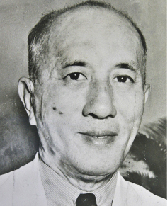
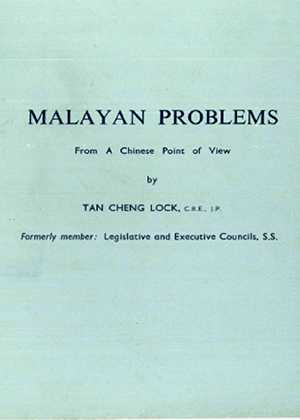

.jpg)









-Footer.png)
